Now Reading: How to Become a Radiology Tech Without a Degree: Your Guide to Certification
-
01
How to Become a Radiology Tech Without a Degree: Your Guide to Certification


Demystifying the Radiology Tech Career Path
The demand for skilled healthcare professionals continues to rise across the United Kingdom. Many individuals are looking for a radiology tech career path that offers stability without requiring a traditional four-year university degree.
Radiology technologists serve as the eyes of the medical world. They use advanced imaging technology to help doctors diagnose and treat various illnesses and injuries.
This role is vital to modern medicine because it bridges the gap between complex technology and patient care. Without their expertise, many life-saving treatments would be impossible to administer accurately.
What is a Radiology Technologist?
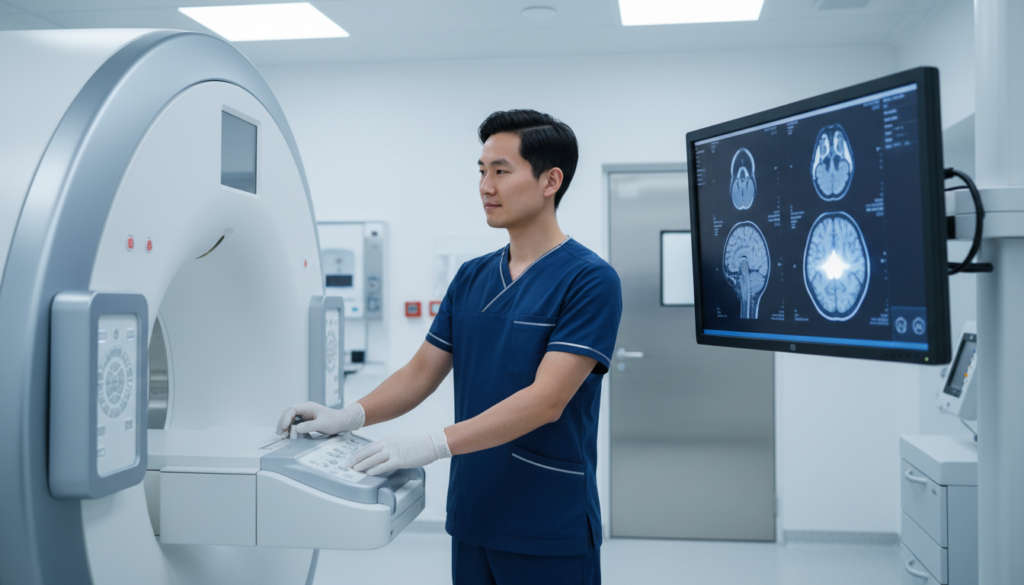
A radiology technologist is a trained professional who operates specialized equipment like X-ray machines, CT scanners, and MRIs. They are responsible for producing high-quality images of the internal body.
While the technology is complex, the human element is equally important. These professionals ensure that every image captured meets the strict diagnostic standards required by medical teams.
Role and Responsibilities
The primary duty of a technologist is to position patients correctly to get the best possible image. This requires a deep understanding of human anatomy and the physics of imaging.
They must also follow strict safety protocols to protect patients and themselves from unnecessary radiation exposure. Accuracy in these procedures is essential for maintaining safety standards.
Beyond imaging, they maintain equipment and keep detailed records of every procedure. This administrative side ensures the department remains compliant with healthcare regulations.
Impact on Patient Care
Radiology technologists are often the first point of contact for patients undergoing diagnostic tests. Their ability to provide comfort and clear instructions can significantly reduce patient anxiety.
Their work directly influences the speed and accuracy of a medical diagnosis. A clear image can lead to the early detection of diseases, which often results in better health outcomes.
By working closely with doctors and nurses, they contribute to a collaborative environment. Their technical input is a cornerstone of the modern healthcare delivery system.
Dispelling Myths: Degrees vs. Certifications
There is a common misconception that entering this field requires a long and expensive university education. While degrees are common, they are not the only way to enter the profession.
Understanding the various entry points allows career changers and graduates to make informed decisions. Many are surprised to find that vocational routes can be just as effective as academic ones.
Why many assume a degree is mandatory
Most people assume a degree is necessary because radiography is a highly technical and regulated field. The complexity of the machinery often suggests a need for deep academic study.
Furthermore, many traditional recruitment advertisements emphasize university qualifications as the standard benchmark. This creates a perceived barrier for those who prefer hands-on learning.
The regulated nature of the healthcare sector also contributes to this perception. People often equate professional registration with a mandatory four-year degree program.
The reality of alternative pathways
In reality, there are several alternative routes into the profession, such as apprenticeships and specialized certification programs. These paths focus on practical skills and on-the-job training.
Apprenticeships allow individuals to earn a salary while they learn the trade in a clinical setting. This makes the career accessible to those who cannot commit to full-time academic study.
By focusing on specific certifications, individuals can often enter the workforce faster. These alternative pathways meet the same rigorous standards required for professional practice in the UK.
Traditional vs. Alternative Paths: Can You Become a Radiology Tech Without a Degree?
Many individuals wonder how to become a radiology tech without a degree from a traditional four-year university. While the medical field often emphasizes academic credentials, there are alternative vocational routes available for those seeking a faster entry into the profession.
The short answer is that while you generally need some form of formal post-secondary education, it does not always have to be a multi-year university degree. Accredited certificate and diploma programs offer a streamlined approach for students who want to focus strictly on technical skills.
These alternative routes provide the necessary training to pass certification exams and secure entry-level positions in hospitals or diagnostic centers. They are often more affordable and require less time to complete than traditional academic paths.
The Traditional Route: Associate’s or Bachelor’s Degree
Most aspiring radiographers choose to enroll in a community college or university to earn a formal degree. This path is widely recognized by employers and provides a broad educational foundation.
Program duration and curriculum
An Associate of Applied Science usually takes two years to complete, while a Bachelor’s degree requires four years of full-time study. These programs are designed to balance classroom instruction with practical lab work.
The curriculum combines general education requirements with specialized courses in radiographic positioning and radiation physics. Students also study patient care procedures and medical ethics to prepare for clinical environments.
Advantages of a degree
Holding a degree often makes candidates more competitive in the job market and provides a foundation for future management roles. It is the most common route for those who wish to work in high-level research or teaching positions.
Many specialized modalities, such as MRI or CT scanning, may prefer candidates with a broader academic background. Furthermore, a degree can make it easier to transfer credits if you decide to pursue a different medical specialty later.
Exploring Non-Degree Pathways: The ‘Without a Degree’ Option
If a long-term university commitment is not feasible, several vocational and hospital-led programs offer valid alternatives. These paths focus on the core competencies required for the role.
Accredited Certificate Programs and Diplomas
Certificate programs are designed for students who want a direct path to employment without the extra baggage of general education credits. These programs are often offered by vocational schools or technical colleges.
These programs focus heavily on the technical aspects of medical imaging and radiation safety. They are specifically tailored to meet the requirements of national certification boards in a shorter timeframe.
Hospital-based training programs (where available)
Some large medical centers host their own training programs to develop their own workforce internally. These programs are often highly immersive and allow students to learn in the same environment where they will eventually work.
Hospital-based training often provides a direct pipeline to a job upon completion of the program. Because these programs are run by healthcare providers, the training is often highly practical and updated with the latest technology.
Apprenticeships (if applicable in specific regions)
In the UK, degree apprenticeships allow individuals to work as a radiography assistant while studying for their qualifications. This model allows you to gain a professional status without the upfront costs of traditional tuition.
This “earn while you learn” model is an excellent way to gain professional status while building a network within a specific hospital trust. It provides a unique blend of academic theory and immediate workplace application.
Key Requirements for Non-Degree Programs
Even without a traditional degree, applicants must meet specific standards to ensure they are prepared for the rigors of the field. These requirements ensure that every technician provides safe and accurate care.
High school diploma or GED
A high school diploma or an equivalent qualification is the absolute minimum requirement for any radiology training program. This proves you have the basic literacy and numeracy skills needed for medical calculations.
Admissions officers look for strong performance in science and mathematics during your secondary education. High marks in these subjects indicate that you can handle the complex physics involved in radiography.
Prerequisite courses (e.g., anatomy, physiology, medical terminology)
Most programs require you to complete foundational science courses before you can begin specialized radiology training. These prerequisites ensure all students start with the same basic medical knowledge.
Understanding human anatomy and medical terminology is essential for accurately positioning patients and communicating with doctors. These courses are often available at local community colleges or through online platforms.
Clinical experience components
Hands-on training is a mandatory part of any accredited radiology program, regardless of whether it grants a degree. You cannot become certified without proving your skills in a clinical setting.
Students must complete a set number of clinical hours in a real-world healthcare setting to demonstrate their technical proficiency. This experience is vital for learning how to handle different patient types and complex imaging equipment.
The Fastest Path to Becoming a Radiology Tech
Many individuals wonder how to become a radiology tech without a degree while still meeting the rigorous standards of the healthcare industry. While most roles require a formal qualification, specialized certificate programs offer a faster alternative to traditional four-year university paths.
These vocational routes focus strictly on the technical skills and clinical hours needed for professional certification. This allows students to enter the workforce much sooner than those pursuing a broad academic degree.
Choosing the right program involves balancing speed with the quality of instruction. Prospective students should look for curricula that align with national standards to ensure they are ready for immediate employment.
Accelerated Certificate Programs
Program length (e.g., 12-24 months)
Most accelerated certificate programs are designed to be completed within 12 to 24 months. This condensed timeframe focuses on core competencies required by regulatory bodies.
The specific duration often depends on the institution and the student’s previous educational background. Some programs allow for credit transfers that can further reduce the total time spent in the classroom.
Intensive curriculum overview
The curriculum for these programs is rigorous and highly focused on medical imaging technology. Students study anatomy, physiology, and radiation physics in a fast-paced environment.
Clinical rotations are a significant part of the training, providing hands-on experience in hospital settings. These rotations ensure that theoretical knowledge is applied in real-world scenarios immediately.
Ideal candidates for accelerated programs
These programs are best suited for individuals who can commit to a heavy workload and have strong time-management skills. Career changers often find these routes attractive due to the quick turnaround for entering a new field.
High school graduates who are certain about their career path also benefit from this direct approach. It minimizes the time spent on elective subjects that are unrelated to the daily tasks of radiography.
Maximizing Your Program Choice for Speed
Online vs. In-person components and hybrid models
Hybrid models combine online lectures with in-person laboratory sessions to offer greater flexibility for the student. This structure can help individuals balance their studies with existing personal or professional responsibilities.
Fully in-person programs often provide more immediate access to faculty and specialized imaging equipment. Choosing the right format depends on how quickly a student can master the technical aspects of the machinery.
Full-time commitment vs. part-time studies
A full-time commitment is generally necessary to complete a program in the shortest possible time. Full-time students often finish their certification requirements months ahead of their part-time peers.
Part-time studies offer a slower pace for those who must work while they are learning. However, this will naturally extend the time it takes to become eligible for national registration and professional employment.
Choosing accredited programs for efficient certification eligibility
Selecting an accredited program is vital for ensuring that your education is recognized by national boards. In the UK, this means ensuring the program is approved by the Health and Care Professions Council.
Non-accredited programs may lead to significant delays or the need for additional coursework later. Verification of accreditation status should be the first step in the application process to ensure a smooth transition to a career.
Becoming a Radiographer in the UK: Specific Requirements and Pathways
Many individuals explore how to become a radiology tech without a degree to enter the healthcare field quickly. In the United Kingdom, however, the pathway is strictly regulated to ensure patient safety and high clinical standards.
To work as a radiographer in the UK, you must complete a formal education program. This process involves specific academic and clinical training that aligns with national healthcare regulations.
The Role of a Radiographer in the UK (vs. Radiologic Technologist in US)
While the terms are often used interchangeably, the UK healthcare system uses the title radiographer. This role requires a high level of technical expertise and patient care skills.
In the United States, the equivalent role is often called a radiologic technologist. Both roles involve operating advanced imaging equipment, but the UK system has distinct educational requirements.
Diagnostic vs. Therapeutic Radiography
Diagnostic radiographers focus on using imaging techniques like X-rays, CT scans, and MRIs. Their primary goal is to help doctors diagnose injuries or illnesses within the body.
Therapeutic radiographers specialize in treating patients who have cancer. They use high-energy radiation to target and destroy cancer cells as part of a treatment plan.
Differences in terminology and scope
The scope of practice for a UK radiographer often includes more clinical interpretation. Some experienced radiographers are trained to provide initial reports on the images they produce.
In the US, the term technologist is standard, whereas the UK protects the title of radiographer by law. Only those registered with the proper authorities can use this professional designation.
Degree Requirements in the UK
Education is the foundation of a career in radiography within the British healthcare system. It is not possible to practice in this field without meeting specific academic benchmarks.
Bachelor’s degree (BSc Hons) in Radiography as the standard
The most common route is to earn a Bachelor of Science with Honours in Radiography. These programs typically take three years of full-time study to complete.
These degrees combine classroom learning with extensive clinical placements. Students spend significant time working in NHS hospitals to gain hands-on experience under supervision.
Apprenticeship degrees as an emerging alternative
Degree apprenticeships provide a way to earn a qualification while working in a clinical setting. This path allows you to earn a salary while the employer covers the tuition fees.
Although this is a vocational route, it still results in a full degree. It is an excellent option for those who prefer a more practical, work-based learning environment.
Professional Registration: HCPC
Once education is complete, practitioners must join a national registry. This step is mandatory for anyone wishing to work in the public or private health sectors.
Importance of Health and Care Professions Council (HCPC) registration
The Health and Care Professions Council (HCPC) is the regulatory body for radiographers. They maintain a register of professionals who meet their standards for training and conduct.
It is a legal requirement to be registered with the HCPC to practice in the UK. This regulation protects the public by ensuring all radiographers are competent and ethical.
Routes to registration (UK-qualified vs. international applicants)
Graduates from UK-approved degree programs are eligible to apply for registration immediately. The university usually confirms the successful completion of the course directly to the council.
International applicants must undergo a rigorous assessment of their existing qualifications. The HCPC compares their training to UK standards before granting them the right to practice.
Fastest Paths in the UK
While a degree is required, there are ways to speed up the process for certain individuals. These routes depend on your previous educational background and clinical experience.
Considering accelerated degree programs (if available)
If you already hold a degree in a relevant science subject, you may qualify for a pre-registration Master’s degree. These programs are often referred to as accelerated routes.
These courses typically last two years instead of three. They provide a condensed version of the curriculum for students who already have a strong foundation in human biology or physics.
Bridging courses for related healthcare professionals
Some healthcare assistants or support workers may find pathways to transition into radiography. These individuals often start with lower-level vocational qualifications to build experience.
While these bridging steps provide a foundation, the individual must still complete a degree or degree apprenticeship. This ensures they meet the mandatory requirements for HCPC registration.
Certification and Licensure: The Crucial Steps

Many individuals wonder how to become a radiology tech without a degree while still meeting professional standards. While a four-year degree is not always required, certification and licensure are non-negotiable for clinical practice.
National bodies and state boards regulate the profession to ensure patient safety and technical competency. You must meet specific benchmarks before you can legally operate medical imaging equipment in a clinical setting.
Understanding National Certification (e.g., ARRT in the US)
The American Registry of Radiologic Technologists (ARRT) is the primary credentialing organization in the United States. They set the standards for medical imaging professionals across the country.
Earning an ARRT credential demonstrates that you have mastered the knowledge required for entry-level practice. This certification is recognized by employers as a mark of professional excellence and reliability.
Eligibility requirements for the ARRT exam
To qualify for the ARRT exam, candidates must complete an accredited educational program. This program must provide the necessary didactic instruction and hands-on clinical experience.
Candidates must also demonstrate good moral character by meeting specific ethics requirements. Any previous criminal records or professional sanctions may require a pre-application review by the registry.
Exam structure and content areas
The ARRT exam consists of multiple-choice questions designed to test entry-level knowledge. It covers five major content areas, including patient care and radiation safety.
Other sections focus on image production, procedures, and equipment operation. You must achieve a passing score to earn your national certification and move toward state licensure.
State Licensure Requirements
State licensure is a separate requirement from national certification in most jurisdictions. You must apply to your specific state board to receive the legal authority to practice within that state.
In the United Kingdom, the Health and Care Professions Council (HCPC) serves a similar regulatory function. Technicians must be registered with the HCPC to work in the UK healthcare system.
Varying state-by-state regulations and boards
Regulations vary significantly from one state to another. Some states accept ARRT certification as a direct path to licensure, while others have additional testing requirements.
Prospective technicians should contact their local radiologic health branch for specific instructions. Understanding these rules early prevents delays in beginning your professional career.
Continuing education requirements for renewal
Most states require proof of continuing education to renew your license periodically. This ensures that practicing technicians stay updated on the latest industry standards and safety protocols.
Failure to provide evidence of these credits can lead to the expiration of your license. You must maintain these records diligently to ensure uninterrupted employment.
Maintaining Your Credentials
Earning your initial certification is only the beginning of your professional journey. You must actively manage your credentials to remain in good standing throughout your career.
Credential maintenance involves both administrative tasks and a commitment to learning. This process protects the integrity of the profession and the safety of the public.
Renewal processes and deadlines
The ARRT and state boards require biennial renewal of your registration. This process involves paying a renewal fee and reporting your completed continuing education credits.
Missing a renewal deadline can result in the suspension of your right to practice. It is vital to track these dates carefully to avoid any legal or professional disruptions.
Importance of ongoing professional development
Ongoing professional development allows you to specialize in advanced modalities like MRI or CT scanning. This growth often leads to higher salary potential and increased job security.
Staying engaged with professional organizations helps you adapt to rapid technological advancements. Continuous learning ensures you provide the highest quality of care to your patients.
Career Outlook, Salary, and Growth Potential

The field of medical imaging offers a stable and rewarding path for those wanting to enter healthcare quickly. Many prospective students research how to become a radiology tech without a degree to find alternative pathways like apprenticeships or vocational certifications.
These non-degree routes provide a practical entry point into a profession known for its longevity and upward mobility. Choosing this career ensures you are part of a vital diagnostic team that supports patient care every day.
Job Market Demand for Radiology Techs
The demand for qualified imaging professionals remains consistently high across the global healthcare sector. This sustained need ensures that new graduates can find employment opportunities shortly after completing their training.
Growth projections and job security
Government labor statistics consistently project faster-than-average growth for radiologic technologists over the next decade. This growth translates into thousands of new job openings annually to replace retiring workers and fill new positions.
Job security in this field is exceptionally high because diagnostic imaging is a fundamental component of modern medicine. Healthcare facilities prioritize keeping their radiology departments fully staffed to ensure timely patient diagnoses.
Factors influencing demand (aging population, technological advancements)
An aging global population is a primary driver for the increased demand for diagnostic services. Older adults typically require more frequent medical imaging to monitor chronic conditions and age-related illnesses.
Technological advancements also expand the scope of what radiology technicians can do. As imaging equipment becomes more sophisticated, it is used more frequently for early detection and non-invasive procedures.
Average Salary Expectations
Radiology technicians enjoy competitive compensation packages that often exceed the national average for other vocational roles. Salaries are structured to reward technical proficiency and clinical expertise.
Factors affecting salary (experience, location, specialization)
Geographic location plays a significant role in determining pay scales, with urban medical centers often offering higher wages to match the cost of living. Regional demand can also create localized salary spikes.
Years of clinical experience and additional certifications significantly impact your earning potential. Professionals who master multiple imaging modalities are often prioritized for higher-paying positions.
Entry-level vs. experienced technologist salaries
Entry-level technicians can expect a comfortable starting wage that provides immediate financial stability. These initial roles serve as a foundation for building a long-term, lucrative career in the medical field.
Experienced technologists who have spent several years in the field often see substantial salary increases. Senior roles and specialized positions can command premium pay rates within both public and private health systems.
Opportunities for Advancement
A career in radiology is not static and offers numerous avenues for professional development. Technicians can choose to deepen their clinical skills or move into different areas of healthcare operations.
Specializations (MRI, CT, Mammography, Sonography)
Many technicians choose to specialize in specific modalities such as Magnetic Resonance Imaging (MRI) or Computed Tomography (CT). These specializations often require additional training but lead to higher pay and more technical responsibilities.
Other paths include Mammography or Sonography, which allow professionals to focus on specific patient populations or diagnostic needs. Diversifying your skill set makes you a more versatile and valuable asset to any medical facility.
Leadership, educational, and administrative roles
For those interested in management, the path to becoming a department lead or radiology administrator is well-defined. These roles focus on staff supervision, budgeting, and ensuring department efficiency.
Clinical education is another viable route for experienced technicians who wish to train the next generation. Working as a clinical instructor or program director allows you to influence the future of the profession.
Conclusion:
Entering the medical imaging field is an achievable goal for those seeking a rewarding healthcare career. Many candidates specifically research how to become a radiology tech without a degree to find faster entry points into the profession.
While a traditional university education is a common route, vocational certificates and diplomas offer viable alternatives. These programs focus on practical skills and clinical experience rather than general academic theory.