Now Reading: The Future is Submerged: How Underwater 3D Printing is Changing Marine Construction
-
01
The Future is Submerged: How Underwater 3D Printing is Changing Marine Construction
The Future is Submerged: How Underwater 3D Printing is Changing Marine Construction


Introduction to Underwater 3D Concrete Printing
Traditional marine engineering faces immense logistical hurdles, from high-pressure environments to the complexities of underwater curing. The emergence of Underwater 3D Concrete Printing represents a paradigm shift in how we approach subaquatic infrastructure.
This breakthrough, spearheaded by the University of Wollongong (UOW) and LUYTEN 3D, offers a specialized solution for offshore construction. By automating the deposition of material directly on the seabed, this technology minimizes human risk and operational costs.
For port authorities and defense contractors, this innovation is crucial for maintaining resilient coastal assets. It bridges the gap between digital precision and the volatile conditions of the marine environment.
The Breakthrough: UOW and LUYTEN 3D’s Innovation
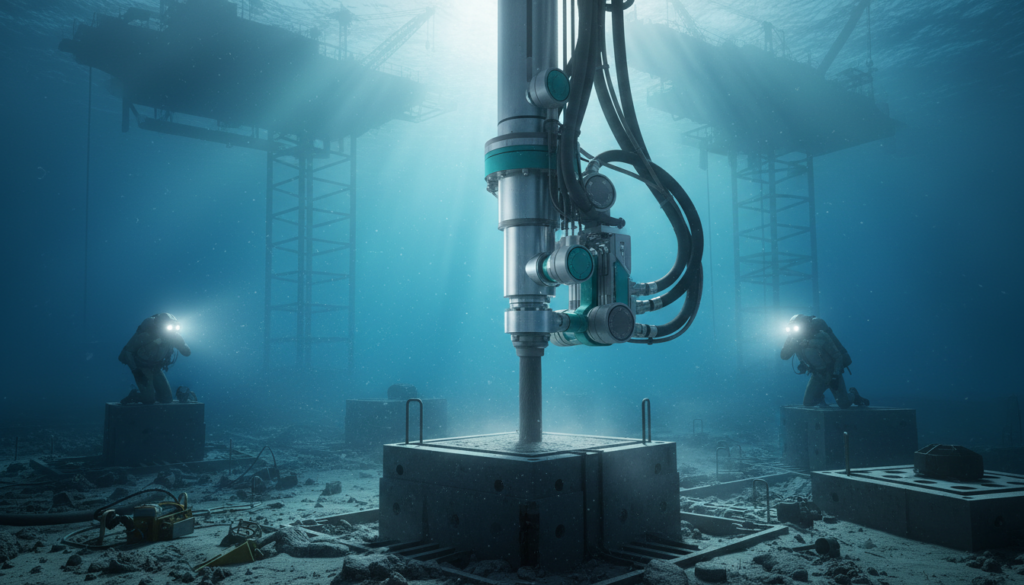
Addressing traditional challenges in marine construction
Conventional methods rely heavily on precast elements or expensive formwork that must be secured against currents. These processes are often hindered by poor visibility and the logistical difficulty of transporting heavy components to depth.
The collaboration between UOW and LUYTEN 3D targets these specific pain points by utilizing additive manufacturing. This allows for the creation of complex geometries that were previously impossible to cast in situ.
Overview of the system and its significance
The system utilizes a specialized robotic arm and a proprietary mortar mix designed to set rapidly in saltwater. This ensures structural integrity is maintained during the printing process without the need for external support.
Its significance lies in its ability to produce bespoke structures, such as artificial reefs or turbine bases, with minimal waste. This level of customization provides marine engineers with unprecedented design flexibility.
Why Underwater Construction Demands Innovation
Limitations of current methods (cost, time, environmental impact)
Current marine construction is defined by high carbon emissions and significant physical footprints. The transport of materials and the use of heavy machinery contribute to escalating project budgets and timelines.
Furthermore, traditional concrete pouring can lead to sediment disturbance and chemical leaching. These factors pose a continuous threat to sensitive benthic ecosystems and local biodiversity.
The need for durable, sustainable solutions
As sea levels rise and offshore energy demands increase, the industry requires infrastructure that can withstand extreme corrosive forces. Sustainable solutions must prioritize material longevity while reducing the overall ecological impact.
Advanced printing technologies allow for the integration of eco-friendly materials and optimized shapes. These innovations ensure that future marine projects are both economically viable and environmentally responsible.
Unpacking the Technology: How it Works
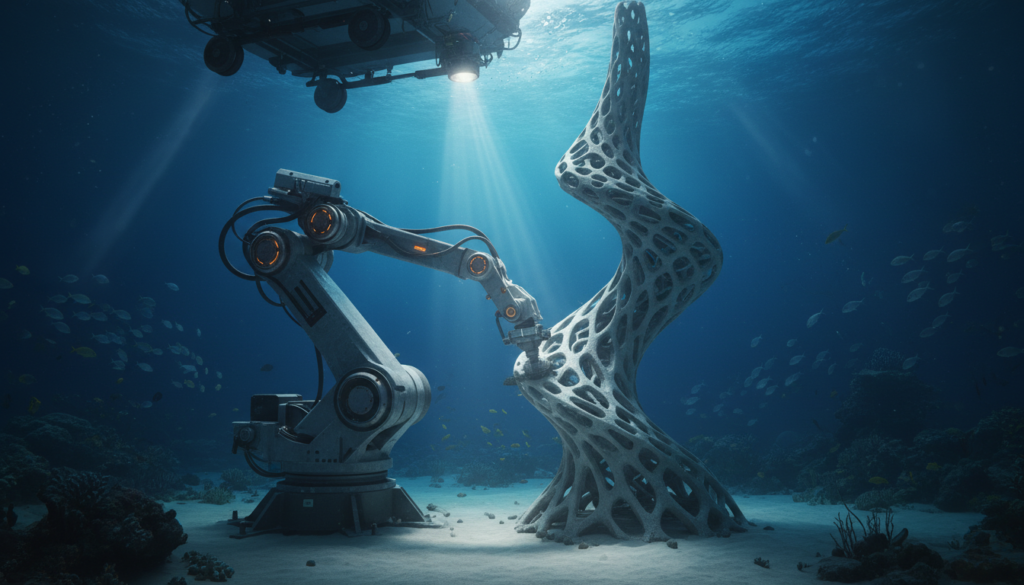
The evolution of marine infrastructure is currently being reshaped by the emergence of underwater 3D printing technology.
This innovation combines a specialized concrete mix with advanced robotics to build directly on the seafloor.
By eliminating the need for complex formwork, this system allows for unprecedented design flexibility in submerged environments.
The Revolutionary Single-Mix Concrete
Composition and unique properties for underwater setting
The core of this technology is a proprietary single-mix concrete designed to cure effectively in high-pressure aquatic conditions.
It maintains a specific viscosity that prevents dispersion upon contact with water, ensuring the material remains where it is deposited.
Resistance to washout and maintenance of structural integrity
The mix is engineered to resist washout, a common failure point in traditional marine concreting where currents strip away cement.
This stability ensures that every printed layer retains its intended shape and structural integrity during the critical hydration phase.
The 3D Printing System: Design and Functionality
Robotic integration and precision in submerged environments
The system utilizes multi-axis robotic arms equipped with specialized extruders capable of operating at significant depths.
These robots use real-time sensors to adjust for currents and seafloor topography, ensuring millimeter-level precision.
The automated printing process without human intervention
Once deployed, the printing process is fully automated, following pre-programmed digital models with minimal surface oversight.
This autonomy allows for continuous operation, significantly accelerating the construction timeline for complex marine structures.
The Absence of Chemical Additives and Accelerators
Environmental benefits of a ‘clean’ concrete mix
Unlike traditional underwater cements that rely on harsh chemical accelerators, this mix utilizes natural rheological properties.
This “clean” approach prevents the leaching of toxic substances into the surrounding water column during the curing process.
Implications for marine ecosystems
By removing synthetic additives, the resulting structures are more biocompatible with local flora and fauna.
This makes the technology ideal for reef restoration and the creation of eco-friendly coastal defense systems.
Key Advantages and Environmental Impact
The transition to additive manufacturing in marine sectors offers a paradigm shift in how we approach offshore durability.
Beyond technical precision, the environmental and economic benefits provide a compelling case for widespread industrial adoption.
Sustainability and Ecological Benefits
Zero chemical runoff into marine environments
The specialized mix design ensures that no harmful runoff enters the ecosystem, preserving water quality.
This is particularly critical for projects in protected marine areas or sensitive offshore habitats.
Reduced carbon footprint compared to traditional methods
By streamlining the supply chain and eliminating heavy formwork, the overall carbon footprint of the project is greatly reduced.
Local material sourcing for the mix further enhances the sustainability profile of these marine operations.
Enhanced Structural Integrity and Durability
Long-term stability and resilience in harsh marine conditions
The layer-by-layer fusion creates a monolithic structure that is highly resistant to salt-water corrosion and erosion.
These structures are designed to withstand the extreme hydrostatic pressures and mechanical stresses of the deep sea.
Precision construction leading to stronger structures
Digital precision eliminates the human error often associated with manual underwater pouring and formwork placement.
The result is a more uniform density throughout the structure, which maximizes long-term load-bearing capacity.
Efficiency, Cost-Effectiveness, and Safety
Faster construction times and reduced labor costs
Automated printing operates around the clock, completing projects in a fraction of the time required by traditional methods.
Reduced on-site personnel and shorter vessel deployment times lead to significant cost savings for contractors.
Minimizing risks associated with human divers in dangerous depths
By utilizing robotic systems, the need for commercial divers to perform high-risk tasks in deep water is eliminated.
This shift dramatically improves safety standards and reduces the liability associated with complex offshore construction.
Transformative Applications Across Industries

The emergence of underwater 3D printing is reshaping how we approach marine engineering and civil works.
This technology allows for the precise deposition of materials in harsh aquatic environments.
It eliminates many of the logistical hurdles traditionally associated with subsea construction projects.
By utilizing automated systems, engineers can now execute complex designs that were previously impossible.
These advancements are driving efficiency across energy, defense, and environmental sectors.
The ability to manufacture directly on the seabed reduces costs and improves project timelines significantly.
Offshore Wind Farms and Renewable Energy Infrastructure
The global transition to green energy requires robust infrastructure capable of withstanding extreme marine conditions.
Advanced manufacturing techniques are becoming essential for the scalability of offshore wind projects.
Rapid construction of foundations and substructures
Automated systems enable the onsite fabrication of turbine foundations, reducing the need for heavy-lift vessels.
This approach allows for custom-designed substructures that adapt to specific seabed topography.
By printing components in situ, developers can accelerate the commissioning of large-scale wind farms.
Maintenance and repair of submerged components
Wear and tear from corrosion and currents necessitate frequent intervention in renewable energy arrays.
Robotic printing systems can apply protective layers or structural patches directly to submerged assets.
This localized repair capability extends the operational lifespan of infrastructure without requiring dry-docking.
Marine Infrastructure and Coastal Protection
Port authorities and civil engineers face increasing pressure from rising sea levels and intensified storm activity.
Modern construction methods provide scalable solutions for strengthening coastal defenses and maritime hubs.
Building and repairing ports, harbors, and breakwaters
Traditional concrete casting in marine environments is labor-intensive and often disruptive to local shipping.
Additive technology allows for the reinforcement of harbor walls and breakwaters with minimal operational downtime.
Strategic placement of printed structures can also optimize wave energy dissipation to protect shorelines.
Creating artificial reefs and promoting habitat restoration
Environmental agencies are leveraging these technologies to design complex geometries that mimic natural rock formations.
These printed reefs provide essential shelter for marine life and help restore biodiversity in degraded areas.
The use of eco-friendly materials ensures that these structures integrate seamlessly with the existing ecosystem.
Defense and Security Projects
For defense contractors and strategic planners, speed and discretion are paramount in underwater operations.
Automated subsea fabrication offers significant advantages for maintaining maritime superiority and securing assets.
Construction of underwater bases and strategic installations
The ability to build hardened structures at depth supports the development of persistent surveillance and communication hubs.
These installations can be designed with complex internal channels for cabling and sensor integration.
Modular printing techniques allow for the expansion of these facilities as mission requirements evolve.
Rapid deployment capabilities for emergency repairs or new structures
In conflict or disaster scenarios, the ability to quickly restore damaged maritime infrastructure is critical.
Mobile printing units can be deployed to repair pier supports or clear navigational hazards in record time.
This rapid response capability enhances the resilience of naval logistics and coastal security networks.
Beyond: Research, Exploration, and Future Possibilities
As technology matures, the potential for deep-sea applications continues to expand into uncharted territories.
Researchers and scientists are looking toward the abyss for the next frontier of industrial development.
Enabling deeper ocean exploration and scientific research structures
Establishing permanent research stations at extreme depths requires materials that can withstand immense hydrostatic pressure.
Additive manufacturing enables the creation of pressure-resistant housings and laboratory modules on-site.
These structures facilitate long-term observation of deep-sea biological and geological processes.
Potential for subsea mining infrastructure
The demand for rare earth minerals is driving interest in the exploration of the deep ocean floor.
Developing the necessary infrastructure for extraction requires robust, remotely operated construction systems.
Automated printing could provide the foundation for sustainable and efficient mining operations in the future.
The Future of Underwater Construction

The landscape of underwater construction is shifting toward a more automated, resilient, and technologically integrated future.
Integrating advanced materials and robotics allows for structures that were previously deemed impossible to build.
This technological evolution promises to redefine how marine engineers and defense contractors interact with the seabed.
Scalability and Global Potential
Scaling these innovations requires a transition from localized prototypes to industrial-grade, repeatable applications.
Current breakthroughs are setting the stage for modular designs that can be deployed across various depths and climates.
This adaptability is crucial for port authorities and renewable energy developers looking to expand their offshore footprints.
Expanding research and development for larger projects
R&D efforts are now focusing on the structural integrity of massive offshore platforms and deep-sea habitats.
Engineers are testing hybrid materials that withstand extreme hydrostatic pressure and highly corrosive environments.
These advancements enable the construction of larger energy hubs and subaquatic infrastructure with greater longevity.
Potential for international collaborations and widespread adoption
Global partnerships between defense contractors and civil engineers are accelerating the standardization of marine technology.
Shared data and cross-border research allow for faster regulatory approval and safer deployment cycles worldwide.
Widespread adoption will likely transform coastal cities into integrated blue-economy hubs through shared infrastructure.
Economic and Societal Implications
The shift toward high-tech marine solutions creates a significant ripple effect across global markets and labor forces.
Economic growth in this sector is intrinsically linked to the rising demand for sustainable energy and resilient coastal defenses.
Investment in these technologies offers a long-term hedge against the challenges of climate change and resource scarcity.
Job creation in advanced manufacturing and marine engineering
The rise of robotic assembly and autonomous systems in subsea environments is creating a demand for specialized talent.
New roles are emerging for systems integrators, remote drone pilots, and marine materials scientists.
This evolution supports a robust workforce transition toward high-value positions within the advanced manufacturing sector.
Advancing sustainable development goals for oceans
Modern construction methods prioritize low-carbon footprints and minimal disruption to delicate benthic ecosystems.
By utilizing eco-friendly materials, developers can meet strict environmental agency standards while building essential infrastructure.
These practices align with global initiatives to protect marine biodiversity while ensuring the sustainable use of ocean resources.
Conclusion: A New Era for Marine Construction
The breakthroughs discussed represent a fundamental shift in how we approach engineering beneath the waves.
By combining robotics, advanced materials, and sustainable practices, the industry is entering a period of unprecedented growth.
This new era of marine engineering will provide the foundation for a more resilient and connected global society.